
Lunch and learns people actually show up for.
The lunch and learn is the most abused format in office life: a sandwich, a slideshow, a slow death by bullet points. Done right, it is also the cheapest recurring wellbeing win available to any HR team. The difference is the topic.
A lunch and learn lives or dies on one question: would anyone google this topic at 11pm? Product updates and process training fail that test. Sleep, back pain, energy and money pass it easily. Book speakers for the 11pm questions, and attendance stops being a problem.
The topics that fill the room
- Sleep. The quality sleep talk we organised in August 2025 opened with a show of hands: who slept badly this week? Nearly the whole room went up, and stayed engaged for an hour. Sleep is the great equaliser of office audiences.
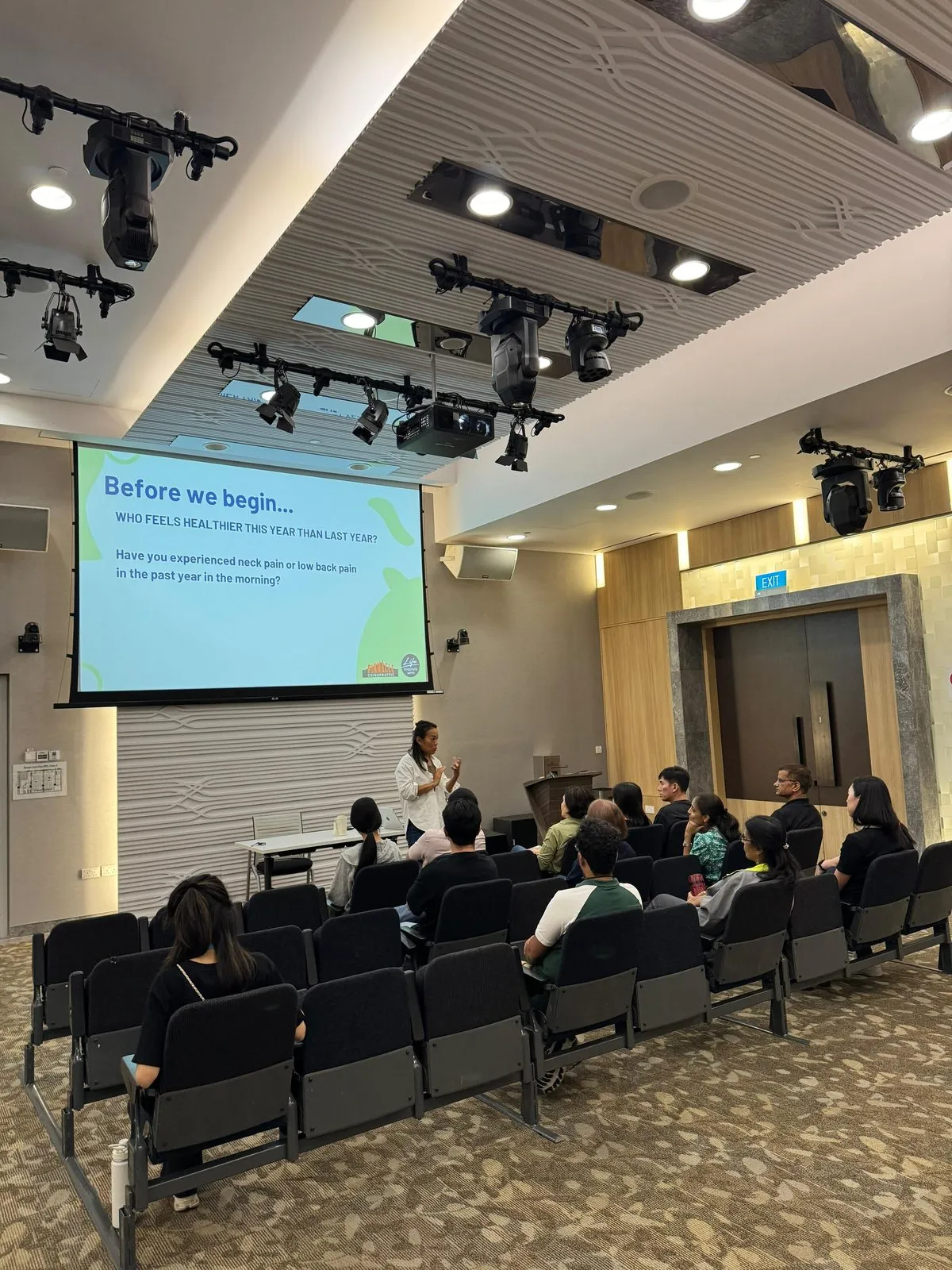
- Neck and back pain. Half the room is quietly stretching against their chair on any given afternoon. A chiropractic talk with live posture demos, like the session at Creative Lighting in October 2025, turns that shared ache into a topic.
- TCM and everyday energy. A TCM talk earns its slot with the acupressure segment: the whole room learns pressure points at their seats, and uses them the same afternoon.
- Money basics. Wills, retirement, investing: the questions everyone has and nobody raises at work. The financial wellness seminars Wee Xin Min hosts keep this strictly educational, plain English, and free of any pitch.
The format that works
Forty minutes of talk, twenty of questions, hard stop. Food arrives before the speaker starts, not during. Keep it in your own boardroom so nobody has to travel, and put the Q&A on the calendar invite, because the questions are the half people come for. The health talk menu we run is built around exactly this shape.
The mistakes that kill the series
Four ways offices sabotage a perfectly good lunch and learn. Making it mandatory: the fastest way to convert a perk into a chore, and the resentment shows in the Q&A. Recording it "for those who cannot make it": once a recording exists, nobody makes it. Letting a vendor pitch: one product plug and the audience never trusts the slot again, which is why the money-topic seminars on this site are educational only, no exceptions. And skipping the food: a lunch and learn without lunch is just a meeting with worse lighting.
The common thread is respect for the deal. People trade their one unclaimed hour for something useful and a meal. Honour both sides of that trade and the room fills itself.
Making it a series
One good talk is a nice Tuesday. A monthly slot becomes part of how the company feels. Rotate the theme: sleep this month, posture next, money basics the quarter after. Series bookings also make sponsorship easier to arrange, and many of our talks run fully sponsored for the company.
Common questions
Personal-benefit topics beat work topics every time. Sleep quality, neck and back pain, immunity, TCM techniques and plain-English money basics consistently fill rooms, because they answer questions people already google privately.
One hour, split roughly 40 minutes of talk and 20 of questions, with a hard stop. Respecting the hour is what earns the format a repeat slot.
The venue is your own boardroom, so the costs are the speaker and food. Many Thrive at Work talks can be fully sponsored or semi-sponsored for the company; enquire with your team size and preferred topic for a concrete proposal.
Fill your next lunch hour.
Pick a topic, we bring the expert to your boardroom. Talks are private to your company and built to fit inside one hour.
See the talk menu