Team experiences
Indoor team building that actually beats the weather.
Singapore gives you two weather settings: rain and regret. Indoor formats are not the backup plan here, they are the plan. These are the ones that work in a normal office, ranked by how little setup they need.
The best indoor team building activities share one trait: they turn a room you already have into the venue. No coach buses, no cancelled-for-lightning clause, no half the team arriving late at some far-flung adventure park. Book the big meeting room, and the event comes to you.
(01)
Needs only a meeting room
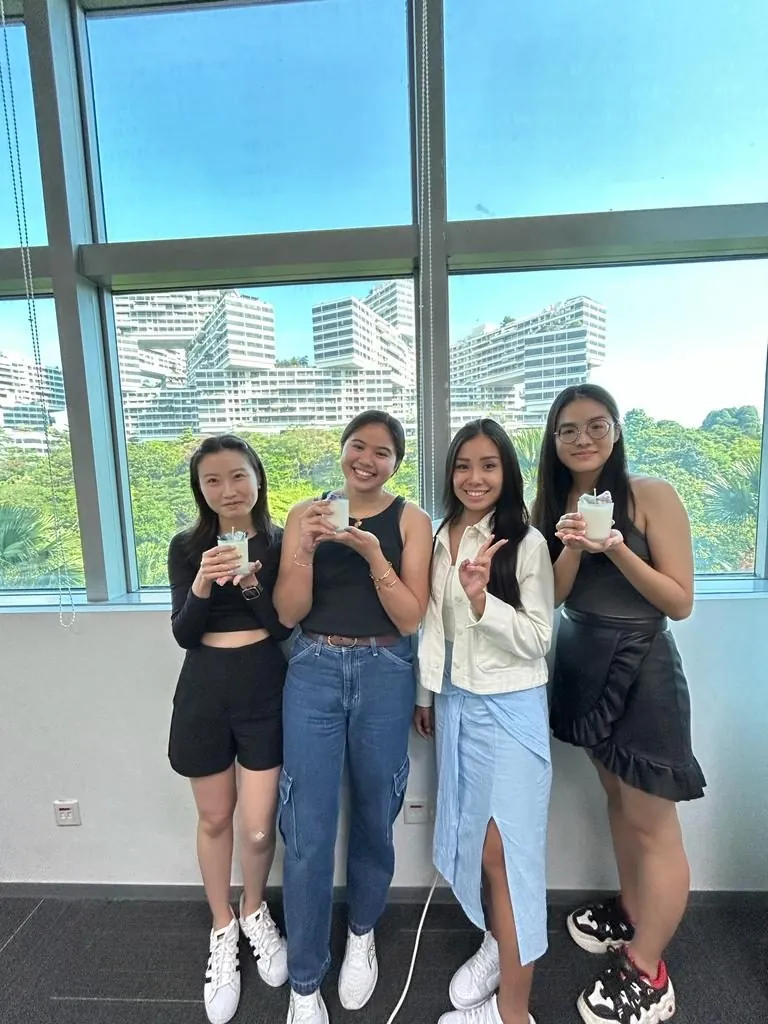
3D art jamming travels fully: canvases, paint, aprons and table covers arrive at your office. Candle making works the same way and suits groups under 30; the Women's Day candle session we organised in May 2023 ran happily in a standard function room. An Enneagram workshop needs even less: chairs, a screen, and a facilitator who knows what they are doing.
(02)
Needs your biggest room
Office fitness classes flip the format: instead of the team going somewhere, an instructor turns your largest space into a studio for an hour. Six class types cover the energy range from cardio kickboxing down to a slow stretch, so the same slot can be a sweat one month and yoga the next. Push the tables aside and the room is ready.
(03)
Needs nothing from attendees at all
Wellbeing formats are the lowest-effort indoor option on the calendar. A lunch-hour health talk or a TCM session with desk acupressure asks people to show up and sit down, which is exactly the right ask for a busy quarter. They also repeat well: a talk series builds a rhythm that a single annual event cannot.
(04)
The rotation that keeps it fresh
Indoor formats repeat better than off-sites, because the marginal cost of the next one is close to zero: the room is already yours. The teams that get the most out of this run a simple quarterly rotation. A creative session one quarter, a fitness block the next, a talk the quarter after, and the year's anchor event, indoors or out, in the fourth. Nobody gets bored, every personality type gets a turn at being in their element, and the wellbeing budget spreads into a rhythm instead of one annual gamble.
The rotation also solves the attendance problem quietly. Someone who skips the fitness class shows up for the candle making. Across a year, everyone has been in the room at least twice, which is exactly the exposure that makes cross-team small talk stop feeling like effort.
(05)
Picking between them
Mixed group and unknown interests: art jamming. Under 30 and slightly crafty: candle making. A team that talks about work but not to each other: Enneagram. Energy to burn: fitness. No time to plan anything: a talk. And if none of those fit, tell us the vibe and we will build a custom day around it, indoors included.
(06)
Common questions
Art jamming, candle making, Enneagram personality workshops, instructor-led fitness classes and lunch-hour wellbeing talks all run inside a standard office. The first two need tables, fitness needs your biggest room, and talks need only chairs and a screen.
Studio-style formats comfortably handle up to 30-plus in one sitting. Talks and screenings scale further because people rotate through. For very large headcounts, indoor formats run as stations across a longer day.
Not when the format is hands-on. What people remember is the activity and the colleagues, not the postcode. An off-site earns its logistics only when you specifically want a change of scenery.
Your meeting room is the venue.
Pick a vibe and a date. We bring the workshop, the materials and the people who run it, right into your office.