
Health screening at the office: what HR needs to know.
Most employees know they should get their numbers checked. Most never book it. Bring the screening to the office and the excuse disappears: a corner of the lobby in the morning, real numbers by lunch. Here is how it works and what HR actually has to do, which is very little.
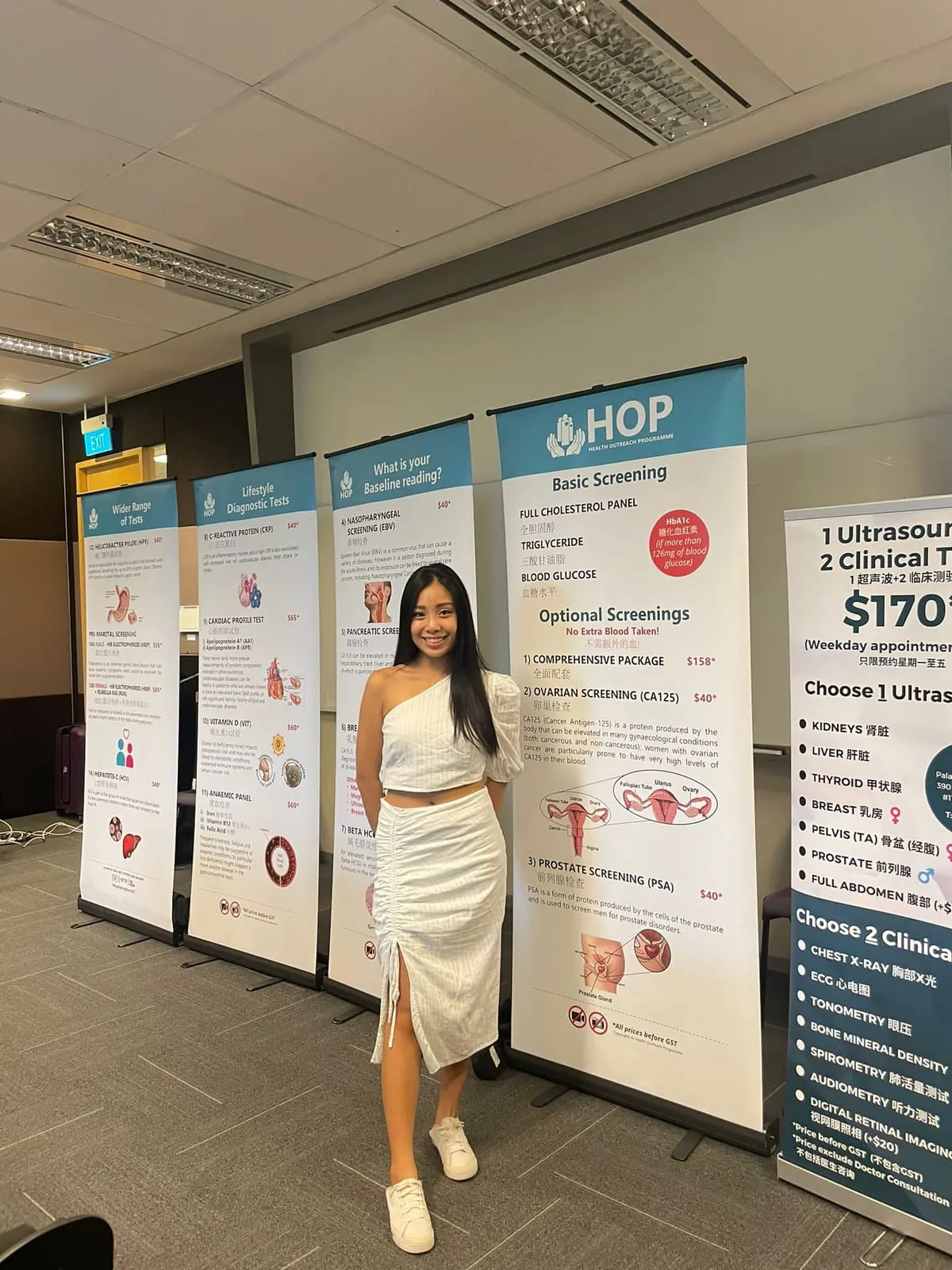
An office health screening day is exactly what it sounds like: professionals set up stations at your workplace and staff walk through between meetings. The basics cover blood pressure, blood glucose, cholesterol and BMI, with results explained one to one, on the spot, in plain English.
Why on-site beats a clinic voucher
Companies have tried the voucher route: here is a free screening, go book it. Uptake is quietly terrible, because the barrier was never the money, it was the errand. On-site flips it. At the screening day we organised in the A*STAR function hall, walk-through traffic did the recruiting by itself: colleagues saw colleagues getting checked and joined the queue. Doorstep-style setups reach people who have not seen a clinic in years.
Consent and privacy, handled properly
This is the part HR worries about, rightly. The rules we run by are simple and non-negotiable. Staff opt in themselves; nobody is marched to a station. Each person sees their own numbers and the company never does. Anyone with a reading that is off gets a quiet pointer to see a doctor, not a lecture in front of the queue. HR shares no staff data at any point; the consent forms come with the screening team.
What HR actually does
Everything else, stations, staff, consent forms and the follow-up pathway, arrives with the screening team. Pair the day with a health talk in the same week and the numbers people receive get context while it is fresh. Screening days also slot neatly into a broader wellbeing calendar.
Scaling up: the wellness bazaar format
For larger offices, the screening day grows into something closer to a mini fair. At the A*STAR wellness bazaar we took part in, the screening stations sat alongside a sports therapy booth and a TCM consultation booth, and the mix changed the atmosphere completely: it read as an event rather than a health check, and foot traffic followed. People who would never queue for a blood pressure cuff wandered over for the TCM pulse reading and got their numbers done while they were there.
The bazaar format suits headcounts in the hundreds, works best in a lobby or function hall, and turns a single wellbeing initiative into the visible kind that staff mention in engagement surveys. If your office has the floor space, it is worth asking about; the setup effort on your side stays exactly one email.
Common questions
The core four: blood pressure, blood glucose, cholesterol and BMI, measured by professionals with results explained individually on the spot. Extended panels can be arranged depending on the format agreed in the proposal.
No. Each person sees their own results and the employer never does. Participation is opt-in, consent forms are handled by the screening team, and anyone with a flagged reading is pointed privately to follow up with a doctor.
A meeting room or a corner of the lobby is enough: tables, chairs and a power point. Stations are set up before the walk-in window opens and packed down after, with no lasting disruption to the office.
The lowest-effort wellbeing win there is.
One email from you, real health numbers for your whole team. Tell us your headcount and preferred week; screening days are private to your company.
View the screening day